


-7110-thumb-800x533f-.webp)

-7110-thumb-124x74f-.webp)






Physical Appearance
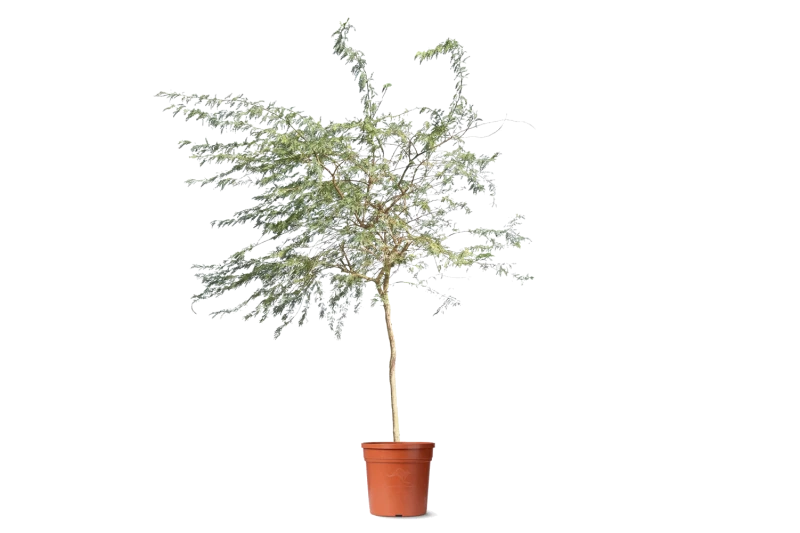
Structure: A small to medium-sized tree (reaching 5 to 9 meters), often growing with multiple trunks rather than a single straight one.
Branches: Features beautiful drooping or "weeping" branches that give it a soft, feathery look.
Thorns: Equipped with sharp, sturdy thorns (2–5 cm long) located at the base of the leaves.
Leaves: Dark green, bipinnate leaves that are longer and more spaced out than those of the White Ghaf.
Flowers and Fruit
Flowers: Bright pale-yellow cylindrical spikes (catkins) that are highly fragrant. They are famous for attracting bees—hence the name "Honey Mesquite."
Fruit: Long, slender seed pods that turn yellowish or tan (sometimes with purple streaks) when ripe. They are sweet and edible.
Key Characteristics
Extreme Resilience: One of the most rugged trees in existence; it handles extreme heat and is more cold-tolerant (frost-resistant) than the White Ghaf.
Roots: Possesses an incredibly deep taproot that can reach water sources deep underground.
Growth: Slightly slower growing than Prosopis alba, but very long-lived and hardy.
Common Uses
Honey Production: Highly valued by beekeepers for producing premium quality honey.
Wood/BBQ: Famous worldwide as a top-tier firewood for smoking meats, as it adds a distinct "mesquite" flavor to food.
Shade: Provides a "filtered" or light shade rather than the dense, heavy shade of the White Ghaf.
Product images, including their size and growth stage, are approximate and for display purposes only
-2202-thumb-480x320f-.webp "Ceramic pot")
-min-3019-thumb-480x320f-.webp "Clay Pot")
-3931-thumb-480x320f-.webp "Fiberglass Pot")
-min-4156-thumb-480x320f-.webp "Plastic Pot - Scheurich")
-min-5025-thumb-480x320f-.webp "Rectangular Fiber Clay Pot Brown")
-6924-thumb-480x320f-.webp "Ceramic Flower Pot")
-7558-thumb-480x320f-.webp "Euphorbia Lacteacristat Plant")